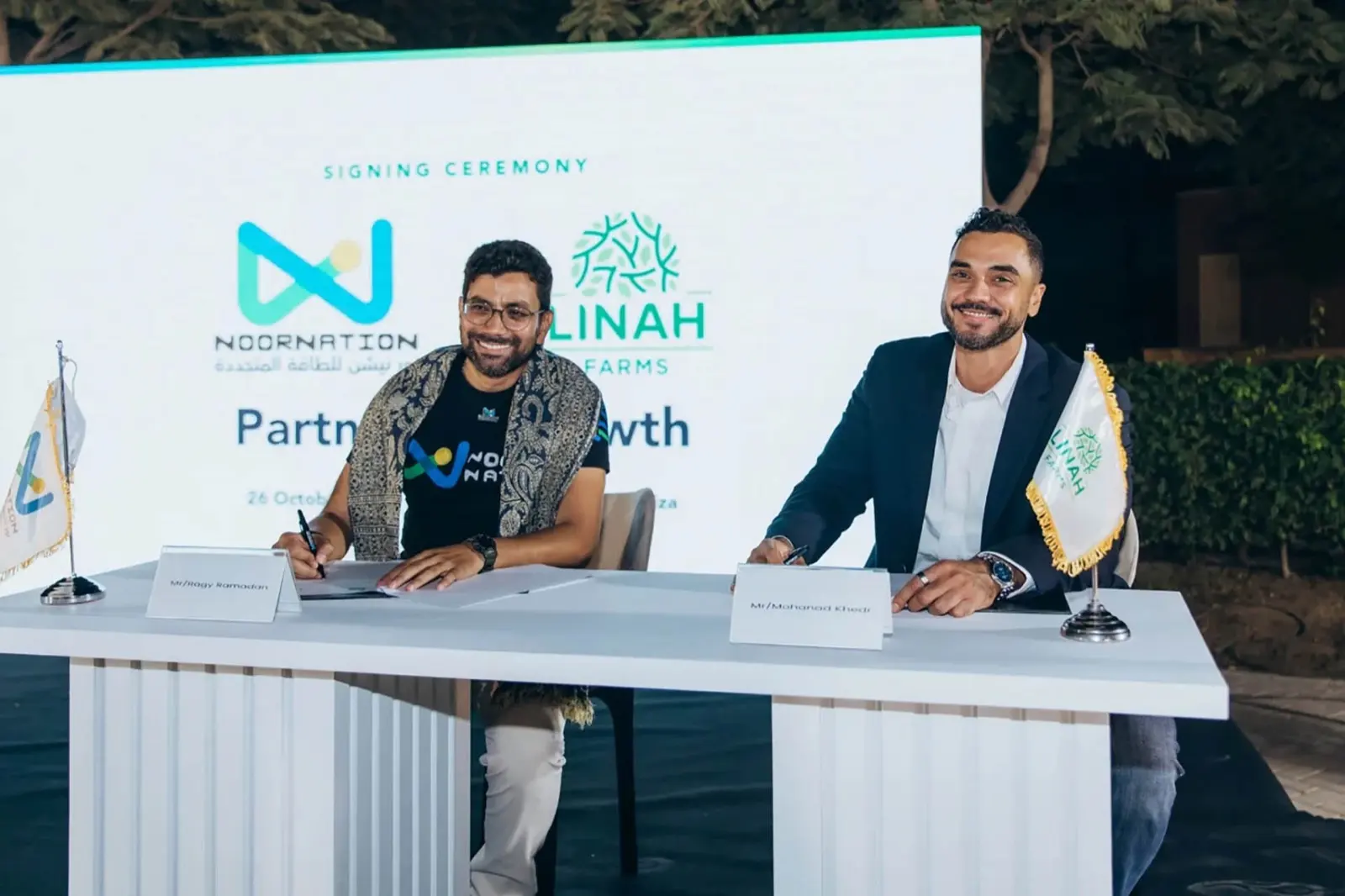
NoorNation, an Egyptian startup that builds solar power and water systems for farms and off-grid sites, has closed a $1.05 million seed round, Wamda reported on 28 October. The investors are Linah Farms, an agribusiness group, the climate-tech investor Catalyst Fund, and KBW Ventures, the Saudi firm founded by Prince Khaled bin Alwaleed, which first backed NoorNation in 2024 for an undisclosed sum.
A customer turned shareholder
The notable investor is Linah Farms, which was already one of NoorNation's biggest clients. NoorNation built solar irrigation for its operations in Bahariya Oasis, a solar-and-battery system at its agricultural school, and a solar system at Sultan Gardens Resort in Sharm El Sheikh. According to the company, the Bahariya project has saved more than EGP 3 million in diesel, and the resort has cut more than EGP 2.2 million from its electricity bill.
Alongside the round, the two signed for five more installations of about 1.13MWp in Bahariya Oasis and West Minya, including solar irrigation and a hybrid power station, Wamda reported. Linah Farms co-founder Mohannad Khadr said the group needed "a company capable of deploying systems across its operations at scale", according to Entarabi.
 More from StartupsINFRAGORA Plans Up to $1B of AI Data Centres in NigeriaThe South African firm wants to start building two AI-ready data centres in Lagos and Delta in 2027, powered by its own gas, solar and battery plant.
What NoorNation sells
Its main product is LifeBox, a self-contained solar unit that runs pumps and desalination without batteries. NoorNation, founded by Ragy Ramadan and Mohamed Khaled, says it has completed about 66 projects with a combined 7MW across 13 Egyptian governorates, and has also worked in the UAE and supplied two LifeBox desalination units to hospitals in Tajikistan with UNICEF, Entarabi reported.
The next push is for small farmers who rely on diesel pumps. A 20-horsepower solar pumping station can cost around EGP 1 million, so NoorNation is building a pay-as-you-go service in which farmers pay for use and own the system after five to seven years. Linah Farms is expected to help finance it alongside partners including the World Food Programme, and NoorNation plans an upgraded platform with automated irrigation and remote soil and water monitoring by the end of December, according to Entarabi.