
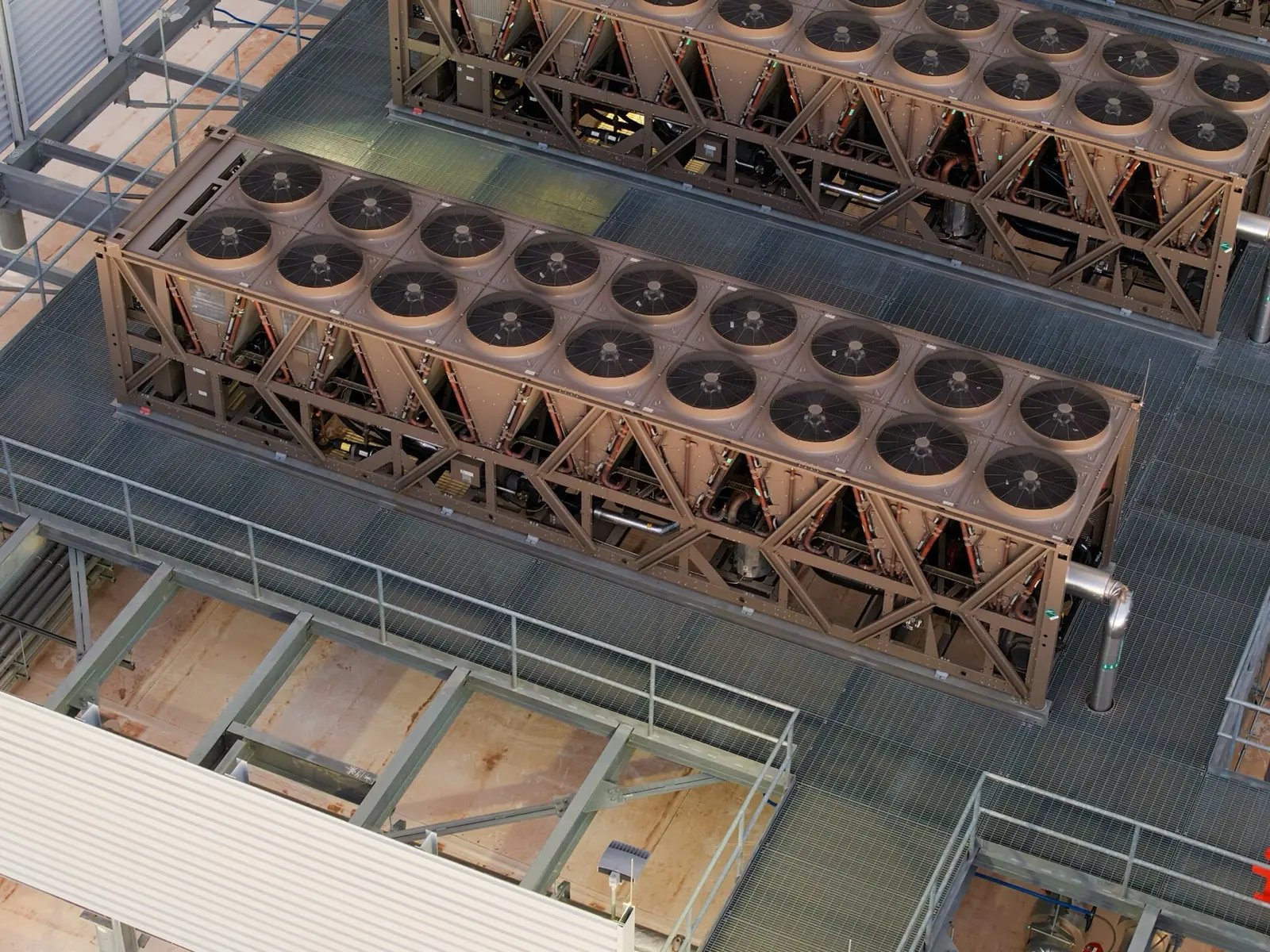
The short answer: anywhere from a few drops to a few litres, depending on what you count. Every figure below is real. They differ because they measure different things.
The numbers so far
- Google (August 2025): a median Gemini text prompt uses 0.24 Wh of electricity, 0.26 mL of water and 0.03 g of CO2-equivalent. Counting only the chips actively working on the prompt, Google's figure drops to 0.12 mL.
- OpenAI (June 2025): chief executive Sam Altman wrote that an average ChatGPT query uses about 0.34 Wh and about 0.000085 gallons of water, roughly 0.32 mL. OpenAI did not publish how it got there.
- Mistral (July 2025): its lifecycle study, which counts training and hardware as well as running the model, puts a 400-token answer, about a page, at roughly 50 mL of water and 1.14 g of CO2-equivalent.
- UC Riverside researchers (2023): on-site water at an average US data centre came to about 2.2 mL per request. Their totals that also count the water used to generate the electricity were about 45 to 47.5 mL.
Why the numbers are so far apart
- On site or off site. Cooling a data centre uses water, but so do many power stations. Google's figure counts the first. Researchers who count both get far bigger numbers.
- One answer or the whole life. Mistral spreads the water used to train the model and make the hardware across every answer. Google and OpenAI report the running cost only.
- Which model and how long the answer. Bigger models and longer outputs use more. Images and video use more again.
- Where and when. Hot, dry places need more water for cooling, and electricity from coal, gas or nuclear plants carries more water than wind or solar.
- Speed of change. Google says the energy per Gemini prompt fell 33 times in a year. Older estimates describe older, thirstier systems.
What it looks like in Africa
A research team including Shaolei Ren of UC Riverside built a water efficiency dataset for data centres in 41 African countries and estimated the water used to run two AI models in 11 of them. A medium email of 120 to 200 words came to about 0.13 litres with Llama-3-70B and about 2.9 litres with GPT-4. A 10-page report came to up to 0.66 litres and about 59 litres respectively.
Nine of the 11 countries came in below the global average for the same model, mainly because their electricity takes less water to generate. The authors say these 2024 estimates are now historical: reported energy efficiency improved more than 30 times between May 2024 and May 2025.
The per-prompt numbers are small. The totals are not. A June 2026 report from the United Nations University's water institute projects that AI's water use by 2030 could equal the basic household water needs of 1.3 billion people for a year, and that AI data centres could use 945 TWh of electricity a year by then.
So, how much per prompt?
For a short text prompt on an efficient, current model: well under a millilitre at the data centre, and up to a few tens of millilitres if you count the power plant too. Long answers, large models, images and video sit higher.
- PCWorld: How much power and water does AI use? Google, Mistral weigh in
- The Register: Google's Gemini water figure and the UC Riverside critique
- Sam Altman: The Gentle Singularity
- arXiv: A Water Efficiency Dataset for African Data Centers
- TIME: AI could use as much water as 1.3 billion people by 2030, UN report warns