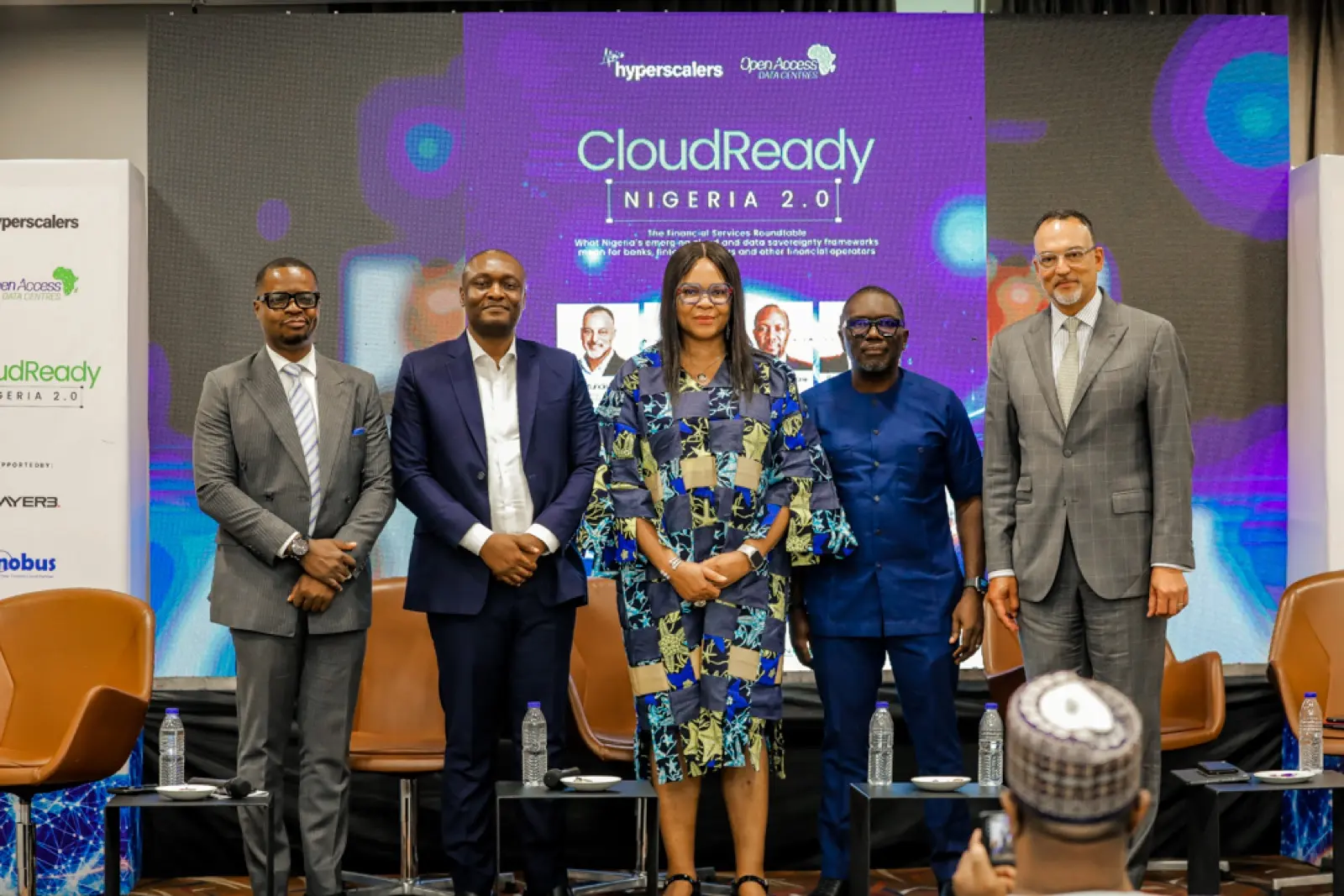

The National Information Technology Development Agency and the Central Bank of Nigeria will bring regulators, banks, fintechs and data centre operators together in Lagos on 28 October for an Executive Regulatory Dialogue on the National Sovereign Cloud Initiative, according to a notice published by Africa Hyperscalers on 19 October.
The stated aim is to agree how the sovereign cloud push applies to the financial sector: what regulators expect, whether domestic infrastructure is ready, and how data localisation and sovereign cloud adoption should work in practice. Discussion will focus on workload classification, regulatory compliance, infrastructure capacity and investment opportunities, the notice says, and the organisers want to leave with priority actions, areas that need clearer rules and chances to collaborate.
Two regulators, one set of servers
The dialogue sits between two overlapping rule books. The CBN told financial institutions and payment companies in June to keep Nigerian payment transaction data at home by 1 January 2027, TechCabal reports. In August, NITDA unveiled the sovereign cloud instruments: a National Cloud Computing Guideline, a National Cloud Technical Guideline, a National Digital Infrastructure Assurance Framework and a National Cloud Investment Strategy, according to Techeconomy.
At that August launch, a message from CBN governor Olayemi Cardoso, delivered by Rakiya Opemi Yusuf, the bank's director of payment system supervision, described the two roles as complementary: the CBN regulates the financial system while NITDA provides the national framework for cloud governance and assurance, Techeconomy reports.
Lawyers quoted by TechCabal describe the result as concurrent compliance. A bank can use a data centre that meets NITDA's standards and still have to prove to the CBN that its payment data is stored, secured and recoverable under financial-sector rules. The open questions, TechCabal notes, are which data counts as primary payment data, whether backups and disaster recovery can stay abroad, and whether a foreign cloud provider can comply through a Nigerian availability zone or a local partner.
- Workload classification: which systems must sit in Nigeria and which can stay in a global cloud.
- Capacity: whether local data centres can take the load before January. At the launch, Galaxy Backbone's chief executive Ibrahim Adeyanju said the initiative arrived just as the CBN directive landed, according to Techeconomy.
- Investment: what certified local providers need to build, and who pays.