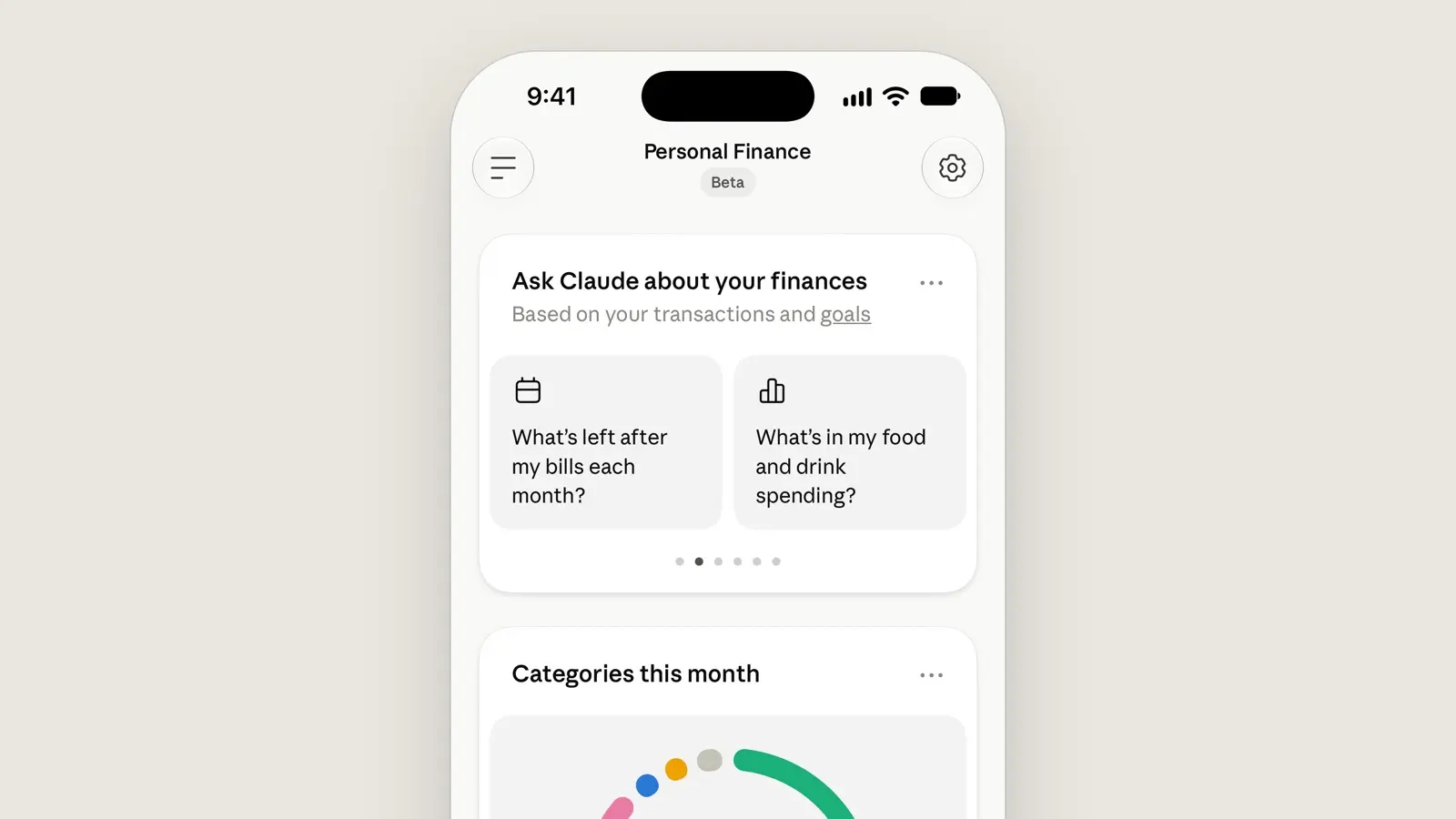
Anthropic on Thursday, 5 November, launched Personal Finance in Claude, a hub inside its AI assistant that connects to a user's bank and card accounts and answers questions about their money in plain language. The beta is rolling out to subscribers in the United States on the Pro, Max and Ultra plans, according to TechCrunch and The Next Web.
Users link accounts by signing in to their bank through Plaid, the service that connects apps to banks, so Claude never asks for or sees a bank password. Anthropic says access is read-only and that Personal Finance "can't move, manage, or invest your money".
What Claude sees and does
For each connected account, Claude sees the bank's name, the account's name, type and last four digits, balances and credit limits, and up to two years of transactions, Anthropic says. From that it can total spending across accounts, sort it into categories such as rent, food and shopping, and flag duplicate charges, unexpected fees and bills that keep rising, TechCrunch reports. Users can ask for a weekly spending chart, a calendar of what is due or a dashboard they keep adjusting.
The Next Web reports that users can link up to 16 US banks, and that for investment, loan and card accounts Claude reads only balances and credit limits.
 Related · AI and Tech StakClaude Can Now Read Your Bank Accounts, in the USAnthropic's new Personal Finance beta links bank and card accounts to Claude through Plaid, read-only, for paying US users. Nigerians cannot use it yet.
Privacy and the business model
Anthropic says conversations inside the Personal Finance hub are not used to train its models, and that users can unlink an account at any time. It warns that Claude can make mistakes and tells users to check important figures with their bank. The company also says the hub has no ads or sponsored recommendations, and that it does not sell credit cards, loans or savings accounts of its own.
That is a pointed contrast with OpenAI, which launched similar personal finance tools for ChatGPT in May and has since started showing ads in ChatGPT, The Next Web notes. Anthropic calls the launch "a first step" and says it is exploring how Claude could work with licensed professionals and regulated firms on bigger money decisions.